





Close
Why You Should Consider Solar Control Glass
Rooflights come with a variety of perks, including allowing the radiant heat of the sun into a space.
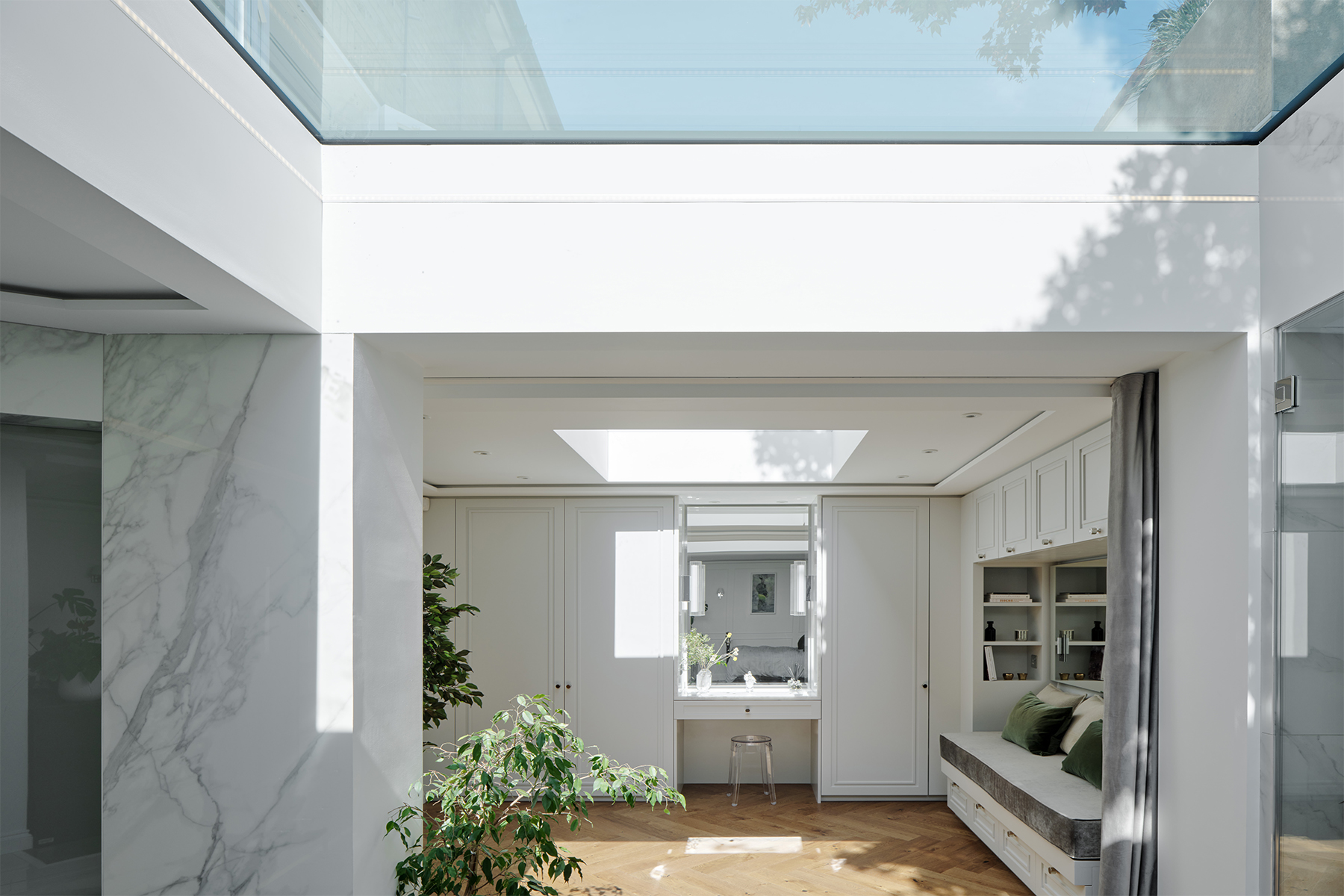
Rooflights come with a variety of perks, including allowing the radiant heat of the sun into a space, but a common concern with this is overheating. The sun provides natural light and warmth, reducing the need for energy consumption, which is environmentally advantageous, but the downside is that its temperature cannot be controlled, leaving the areas below some rooflights uncomfortably hot, especially in summertime. A popular solution to this is solar control glass, which utilises a metal oxide coating applied to the internal face of an IGU’s (insulated glass unit’s) outer pane. The primary function of this is to reflect solar radiation without sacrificing too much light transmission and visibility through the rooflight glazing, but the benefits go both ways because as well as keeping heat out during warm weather, solar control glass contributes to thermal insulation¹.
The sun’s rays travel in short wavelengths that can pass through transparent materials like glass, but when they reach a building’s internal surfaces, they are absorbed and re-emitted at longer wavelengths that have less energy and resultantly disperse before they can pass back through the glass². This creates a build-up of heat that is known as solar gain, and it can make a room unpleasant to spend time in. Solar control glass, however, blocks some of the sun’s shortwave radiation, keeping the internal area at a suitable temperature. During the colder months, this also reduces heat loss from the space because any internal heat waves are prevented from escaping, instead being reflected back into the room.
Our standard solar control glass uses a 70/35 solar control coating that has a light transmission of 70% and a G Value (solar gain value) of 0.35, comparing to the 78/63 of standard clear glass. Visually, the difference to the rooflight is minimal, as the only evidence of the solar control glass is a neutral blue tint that does not compromise the aesthetic of the rooflight. Our coating also improves the U Value of a rooflight, meaning that it has a lower thermal transmittance to effectively keep a property insulated³.
With any new property development, the government’s building regulations must be adhered to. A recent update to Approved Document O provides guidance on how to comply with the limiting values set out in these regulations to avoid overheating in new residential buildings⁴. Solar control glazing can be used as part of a wider strategy to mitigate overheating, especially in locations with increased sun exposure as these will be treated as high risk and will therefore require lower G Values.
Having a rooflight installed in your property is exciting, and we believe that understanding the benefits of solar control glass is vital when planning your project. Solar control glass takes comfort and energy efficiency one step further, making it a great, environmentally friendly investment for the future of your property.
¹ Saint-Gobain. (2023) Benefits of solar control glass. Available at: https://in.saint-gobain-glass.com/blog/benefits-solar-control-glass [Accessed: 8 August 2024].
² Kopp Glass. (2015) Optical Properties of Glass: How Light and Glass Interact. Available at:
https://www.koppglass.com/blog/optical-properties-glass-how-light-and-glass-interact [Accessed: 8 August 2024].
³ NBS. (2015) What is a U-value? Heat loss, thermal mass and online calculators explained. Available at: https://www.thenbs.com/knowledge/what-is-a-u-value-heat-loss-thermal-mass-and-online-calculators-explained [Accessed: 8 August 2024].
⁴ GOV.UK. (2022) Overheating: Approved Document O. Available at: https://www.gov.uk/government/publications/overheating-approved-document-o [Accessed: 8 August 2024].
Get in touch
Fill out our quick form to connect with one of our expert team and learn how our range of rooflights can transform your space.
Tell us about your project and rooflight requirements or even just request a call back.